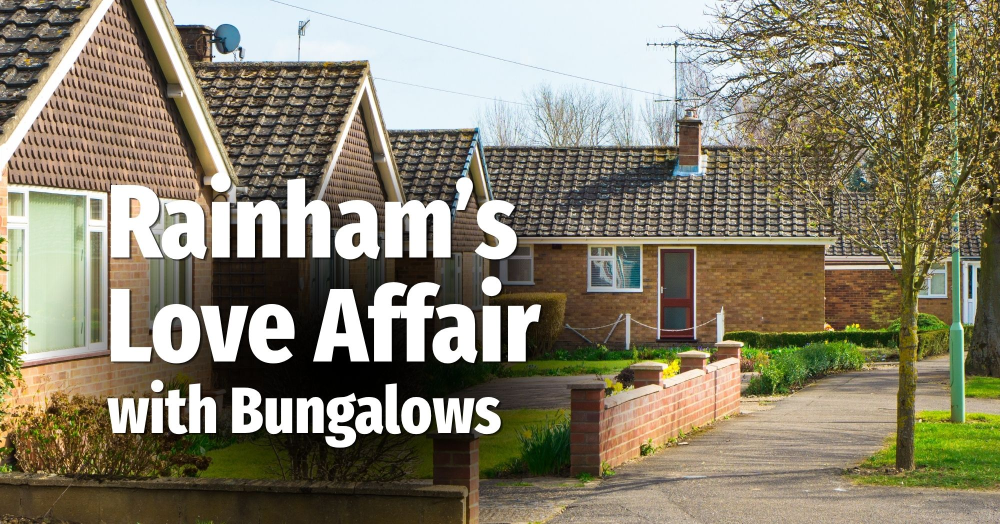
Rainham’s Love Affair with Bungalows
For much of the last two decades, bungalows have quietly slipped out of fashion. Overshadowed by glossy new-build developments, three-storey townhouses and the rise of open-plan modern living, they became seen by many as homes reserved for retirement rather than aspirational moves.
Yet while property headlines have been busy chasing the latest trends, something rather different has been happening beneath the surface of the Rainham property market.
Today, bungalows are becoming some of the most sought-after homes in the area, attracting interest from a far wider range of buyers than many people might expect. Downsizers in their 60s and 70s remain a major part of the market, of course, but increasingly buyers in their late 40s and 50s are also competing for these properties. What was once considered “later-life housing” is now being viewed as smart long-term living.
The Numbers Behind Rainham’s Bungalow Market
Looking at the Rainham property market over the last two years (ME7 and ME8), 365 bungalows came onto the market, accounting for 7.02% of all property listings in the area.
That figure sits slightly below the national average, where 7.62% of homes listed for sale were bungalows.
During the same period, 234 Rainham bungalows successfully sold and completed, achieving an average sale price of £383,945.
Perhaps even more revealing is the price buyers were willing to pay per square foot.
Rainham bungalows achieved an average of £460 per square foot, compared with £343 per square foot for houses and flats over the same timeframe. In simple terms, buyers are prepared to pay a significant premium for the right single-storey home.
Why Buyers Are Paying More
Part of the appeal is obvious.
Bungalows offer something many modern homes increasingly struggle to provide: simplicity.
There are no stairs to navigate, layouts tend to be practical and efficient, gardens are often generous, accessibility is easier and privacy is frequently better than in newer, higher-density developments.
At a time when many homes are being built taller, narrower and closer together, the bungalow feels refreshingly spacious and straightforward.
There is also the issue of future-proofing.
Many buyers are no longer purchasing purely for their current lifestyle. Instead, they are thinking ten, twenty or even thirty years ahead. A well-located Rainham bungalow allows homeowners to remain comfortable and independent later in life without the need for another disruptive move.
Increasingly, I am seeing Rainham couples in their 50s, whose children have flown the nest, making the decision to leave behind a large four-bedroom family home in favour of a more manageable two-bedroom bungalow. They recognise that good housing decisions are often about longevity rather than fashion.
The Post-Pandemic Shift
The pandemic also changed how many people view their homes.
Outdoor space, natural light, quieter surroundings and flexible living arrangements have become far more important in purchasing decisions. Many bungalows, particularly those situated in established residential areas of Rainham, naturally provide exactly these qualities.
Homeowners are spending more time considering how they actually live day-to-day, and for many, the bungalow ticks more boxes than they ever realised.
Scarcity Is Driving Demand
Perhaps the biggest factor underpinning the bungalow market is simple economics: supply and demand.
Only 1,505 new bungalows were built across the UK in 2025, accounting for just 1.3% of all new homes constructed.
The reason is straightforward. Housebuilders generally prioritise higher-density developments because they maximise profitability and land use. Bungalows simply occupy too much land to make them attractive development opportunities.
As a result, the existing stock of bungalows is becoming increasingly valuable because replacement supply remains extremely limited.
This shortage is particularly noticeable in Rainham, where many bungalows occupy mature residential plots that would be difficult to replicate in today's planning environment. Wide frontages, generous gardens and greater spacing between neighbouring properties have become increasingly rare commodities within modern developments.
Buyers recognise this scarcity, and the market reflects it.
Just How Saleable Are Rainham Bungalows?
The figures paint an interesting picture.
Over the last two years, 61.42% of Rainham bungalows that left estate agents' books went on to successfully sell and complete.
For comparison:
- Rainham houses achieved a sale success rate of 60.30%
- Rainham flats achieved a sale success rate of 42.68%
Nationally, bungalows also tend to outperform many other property types, reinforcing the view that correctly priced single-storey homes continue to attract committed buyers.
However, scarcity alone does not guarantee success.
Pricing Still Matters
One mistake some bungalow owners make is assuming that limited supply automatically means buyers will pay whatever figure is being asked.
The reality is very different.
Today's buyers are highly informed, research-driven and price-sensitive. The strongest results continue to be achieved by sellers who price realistically from the outset and position their property correctly within the market.
It is also worth remembering that while 61.42% of Rainham bungalows sold, 38.58% did not.
Demand may be strong, but pricing remains critical.
A Property Type With Broad Appeal
What makes bungalows particularly interesting is the diversity of buyers now entering the market.
Mature downsizers see convenience, comfort and accessibility.
Families see safety, flexibility and room to adapt.
Middle-aged professionals increasingly view them as sensible long-term homes that combine practicality with quality of life.
Even buy-to-let investors are beginning to recognise their appeal, particularly given the growing demand from older tenants seeking single-storey accommodation.
The result is multiple buyer groups competing for a relatively limited supply of homes.
The Future Looks Bright for Rainham Bungalows
What is clear is this: Rainham's love affair with bungalows was never simply a passing phase.
Quietly and steadily, these single-storey homes have re-established themselves as one of the town's most desirable property types.
In a market where space, privacy and practicality are becoming ever more valuable, the humble bungalow is no longer overlooked.
If anything, its best years may still lie ahead.
A Little Property Trivia...
Finally, for those who have ever wondered where the word “bungalow” comes from, it has nothing to do with builders being told to “bung a low roof on it” — however amusing that explanation may be.
The term actually originates from British India during the late 18th and early 19th centuries. British sailors and officials adopted a style of single-storey home commonly found in Bengal, known as a “Bangla” house. Over time, the word evolved into “bungalow”.
And the rest, as they say, is property history.